Beta Edition
Sunday, 24 May 2026
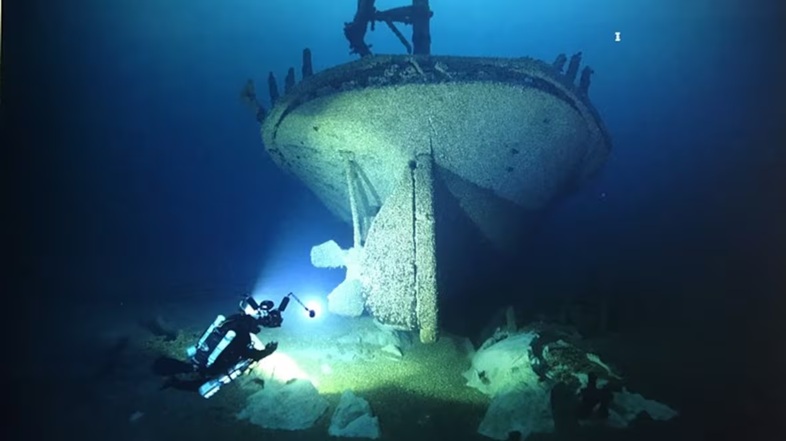
The wreck of the 19th-century luxury steamer Lac La Belle has been discovered in Lake Michigan, bringing closure to a mystery that has endured for more than 150 years.
The vessel, which sank during a violent gale in 1872, was located in October 2022 by a team led by Illinois shipwreck hunter Paul Ehorn. The discovery was formally announced this week by Shipwreck World, an organization dedicated to documenting historic shipwrecks.
Although the wreck was found several years ago, the announcement was delayed as researchers worked to create a detailed 3D model of the site. Harsh weather conditions and limited dive opportunities postponed further documentation efforts.
Breakthrough After Decades of Searching
The discovery capped a search that spanned more than six decades. Ehorn, now 80, has been hunting shipwrecks since his teenage years. A crucial breakthrough came when fellow wreck hunter and author Ross Richardson shared a key clue: a commercial fisherman had recovered an object linked to 19th-century steamships from a specific area of the lake.
Using side-scan sonar, Ehorn and his team identified the wreck just two hours after beginning their search in the narrowed zone.
Scuba diver John Janzen, a member of the expedition, said the team quickly recognized the vessel by its distinctive longitudinal arches — structural reinforcements common in large wooden steamers of that era.
“The arches running along the length of the ship were unmistakable,” Janzen said. “Once we saw them, we were confident we had found Lac La Belle.”
A Tragic Final Voyage
Built in 1864 in Cleveland, the 217-foot passenger steamer had previously sunk in 1866 following a collision in the St. Clair River. It was raised and refurbished in 1869 before returning to service.
On October 13, 1872, the ship departed Milwaukee for Grand Haven, Michigan, carrying 53 passengers and crew along with cargo that included barley, pork, flour, and whiskey. Two hours into the journey, the vessel began taking on water amid powerful waves that extinguished its boilers.
Passengers and crew evacuated into lifeboats as the ship sank stern-first. One lifeboat capsized, resulting in eight fatalities. The remaining survivors reached the Wisconsin shoreline.
Remarkable Preservation
Despite being submerged for more than a century, the wreck remains largely intact. The vessel rests upright on the lakebed, though the upper cabin and pilot house structures are gone. One propeller has broken off and lies nearby.
Divers reported finding remnants of the ship’s cargo, including deteriorating whiskey barrels. However, invasive quagga mussels now cover much of the wreck’s exterior.
According to the University of Wisconsin-Madison’s Wisconsin Water Library, the Great Lakes contain an estimated 6,000 to 10,000 shipwrecks, most of which remain undiscovered. Researchers have expressed concern that invasive species may accelerate the deterioration of these historic sites.
Janzen emphasized that the Great Lakes can be unforgiving.
“The lakes are indifferent to human lives and ships,” he said. “They are nature in its rawest form — and they can be extremely dangerous.”
For Ehorn and his team, however, the successful identification of Lac La Belle marks both the end of one chapter and the beginning of another. With additional targets still on their list, further discoveries may yet lie beneath the surface.